


Just 2 Words Plus
4.6916.00 Reviews
App Specs
- Version
- 2.70
- Updated On
- License
- Free
- Downloads
- 10,000+
- Developer
- Just 2 Fun
- Categories
- Word
- Platform
- Android
Screenshots
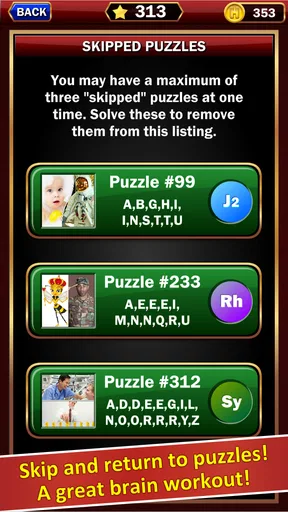
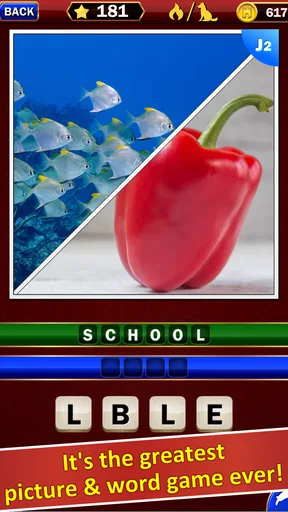
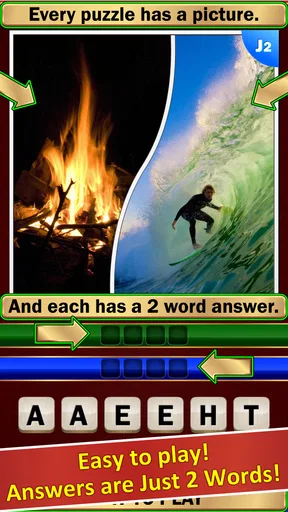
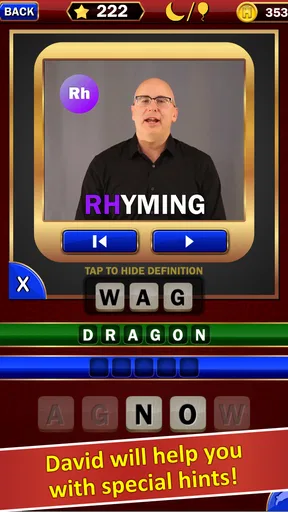
 Analysis by AppCompare
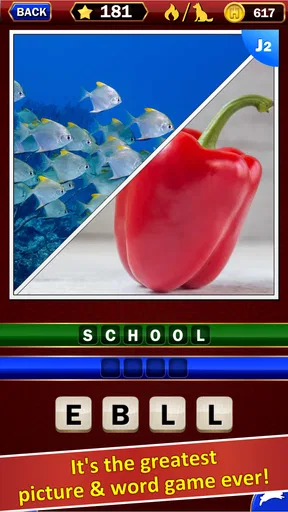
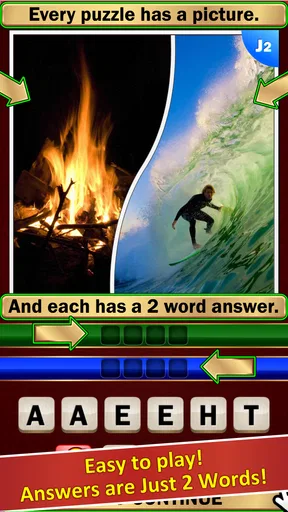
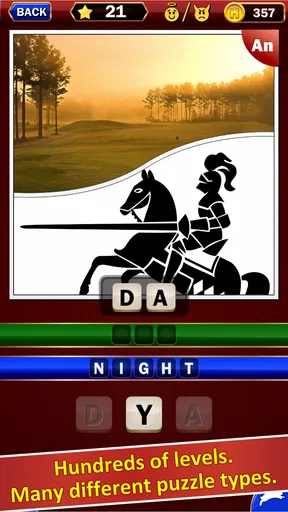
I enjoy word games most when they are easy to start but still make me pause before committing to an answer. Just 2 Words Plus takes that simple idea and builds the whole experience around it: each puzzle expects a response made from only two words. That restriction sounds small, but it changes how I read clues, test possibilities, and decide whether a nearly correct answer is actually the right one.
This is a free word game from Just 2 Fun, aimed at an Everyone audience. It has a 4.6 average from around 2.4 thousand ratings, with more than 10 thousand installs, so it has clearly found a modest but interested audience. I see it as a compact choice for people who want mental exercise without the commitment of a long story, a large board, or a complicated ruleset.
The game is available at no upfront cost, while optional purchases range from $0.99 to $19.99 per item. That makes the spending question worth considering before playing for a long time. The important point is that the basic entry barrier is low, but anyone who dislikes in-game purchase prompts should still approach it with a little awareness rather than assuming every part of the experience is entirely purchase-free.
How the two-word format changes the way you play
I find the two-word limit changes more than the length of an answer: it makes me weigh how a pair sounds together, not just whether each word relates to the clue. That can make a quick guess less useful than pausing to compare a few natural-sounding combinations. It also shapes how I handle a puzzle that seems to allow several answers.
A small answer space with plenty of room for mistakes
The central rule gives the puzzles a clear identity. You are not building a long phrase or filling a large grid; you are searching for a pair of words that fits the clue. In practice, that means I spend less time physically entering an answer and more time judging meaning. A word may be related to the subject, but the second word has to complete the intended idea.
That makes the game suitable for short sessions. I can open it while waiting for an appointment, play through a few challenges, and stop without losing the feeling that I have made progress. It also works well as a gentle way to wake up my vocabulary. The puzzles ask me to make connections, not simply recognize a definition, so the experience feels more active than scrolling through a list of trivia questions.
At the same time, the two-word limit can create frustration. When I understand the general topic but cannot identify the exact wording expected by the puzzle, the problem stops being pure knowledge and becomes interpretation. That is a legitimate trade-off of this format. Players who enjoy finding the precise phrase will probably find that satisfying; players who want several reasonable answers to be accepted may find it restrictive.
Worth Reading Before You Choose

EA SPORTS FC Mobile 26 Is a Bigger Football Game, but It Takes Time

Flipboard Shows What News Apps Must Do Beyond the Feed

Switching to Android Auto Means Rethinking Your Driving Routine

Google Calendar Makes a Crowded Week Easier to Manage

Ludo King Makes the Most of the Minutes Between Plans

Baby Panda World Brings Quick Play to Modern Phones, but Its Game Library Feels Busy
Why the game is useful in everyday moments
A realistic use case is a short break during a busy day. Instead of opening a game that requires remembering a map, waiting for other players, or completing a long level, I can use this one for a focused burst of wordplay. The short-answer structure keeps the mental task visible, and I can put the phone down after a puzzle without needing to reach a checkpoint.
I also think it can work well as a shared activity. Two people can discuss possible answers aloud, especially when one person sees a connection that the other misses. That changes the game from a solitary test into a small conversation about language. It is not a full multiplayer experience in the usual sense, but the puzzle format naturally invites comparison and debate.
For families, the Everyone rating makes the game broadly approachable, though I would still expect younger players to need help with clues that rely on vocabulary or cultural associations they have not encountered yet. Adults looking for a serious language-learning curriculum should keep their expectations realistic. This is a word puzzle game first, not a structured course with lessons, pronunciation practice, or grammar explanations.
Three habits that make difficult puzzles less annoying
My first useful habit is to avoid locking onto the first related word. Because the answer has only two parts, an obvious guess can make me overlook a more natural pairing. I now list a few possible meanings mentally before entering anything. That extra pause is especially helpful when a clue could describe an object, an action, or a familiar expression.
Second, I treat the two words as a unit rather than solving them independently. A strong first word is not enough if the second one sounds unnatural beside it. Reading the proposed answer as something a person would actually say helps separate a plausible solution from a technically related one.
Third, I use disagreement as information. If I think an answer should work but the game does not accept it, I revisit the clue instead of repeatedly changing one letter or forcing synonyms. That approach saves time and makes the puzzle feel more like a reasoning task. The limitation is that the game may still feel opaque when the intended association is unfamiliar, so patience matters more here than in a conventional crossword with crossing letters to guide you.
Progress without turning every session into a race
The appeal of this kind of game depends heavily on how progress feels. I prefer it when the satisfaction comes from solving a tricky clue rather than from being pushed to maintain a streak or chase a leaderboard. Just 2 Words Plus is most enjoyable for me when I treat each puzzle as a self-contained challenge instead of measuring the session by speed.
That approach also makes the game more welcoming to casual players. Someone who only has a few minutes can still engage with the core idea, while a dedicated word-game fan can spend longer examining the wording of difficult clues. The same simplicity that limits the game’s visual or mechanical variety is what makes it easy to return to.
There is a trade-off, though. Players who need a strong sense of long-term progression may find a two-word puzzle format less motivating than a word game with levels, collections, character development, or a large competitive ladder. I would choose this for repeated bursts of thinking, not for an elaborate destination that keeps unfolding over weeks.
Spending, pressure, and what I would watch carefully
The purchase context is straightforward enough to understand: the game is free to start, and individual in-app items are listed between $0.99 and $19.99. I appreciate having that range visible because it reminds me that “free” does not automatically mean every optional convenience has the same cost. I would decide in advance whether I am willing to spend anything, then avoid making a purchase simply because I am stuck on one clue.
That is particularly important in a puzzle game. Difficulty can create its own pressure: after several wrong guesses, a player may feel tempted to pay for help just to remove the irritation. My advice is to take a break first. Returning later with a fresh view is often better for the quality of the experience than treating a single blocked answer as an emergency.
I would also recommend checking the purchase screen carefully before confirming anything, especially if a younger person is playing on a shared device. The Everyone rating describes the intended age suitability, but it does not remove the need for ordinary spending controls. The game is a better fit for households that are comfortable managing optional purchases than for anyone who wants a completely hands-off setup.
Is the challenge fair?
For me, fairness in a word game comes from the relationship between the clue and the expected answer. The two-word rule gives the game a consistent target, but consistency does not guarantee that every clue will feel equally clear. Some answers can be logically defensible while still missing the exact association the puzzle expects. That is the main fairness issue I would keep in mind.
The format is fairest when I can understand why the intended pair belongs together after solving it. It is less satisfying when success depends on guessing the author’s preferred wording without enough context. This is not a reason to dismiss the game; it is a reason to judge it by the kind of challenge it offers. It rewards familiarity with common phrases and flexible association more than formal dictionary knowledge alone.
Compared with a crossword, this game offers fewer intersecting letters to rescue me from a wrong direction. Compared with a standard word search, it asks for more interpretation and less visual scanning. Compared with a daily guessing game, it can feel less tied to a single ritual and more suitable for several short attempts. Those differences make it a useful alternative, but not a universal replacement for every word-game style.
I would choose a crossword when I want layered clues and crossing-letter confirmation. I would choose a spelling game when accuracy at the letter level is my main goal. I would choose a vocabulary app when I want definitions, examples, and measurable study. I choose Just 2 Words Plus when I want the middle ground: quick puzzles that test whether I can connect ideas into a concise answer.
Who should download it, and who should skip it?
This game is a good match for casual players who like language, people who enjoy solving clues through association, and anyone looking for a low-commitment brain teaser. It is also a sensible option for fans of compact mobile games that can be played without learning a large set of controls. The free starting point makes it easy to try before deciding whether the style suits you.
I would be more cautious if you dislike answers that feel subjective. If your preferred word games provide several visible hints, crossing letters, or carefully defined clues, the two-word format may leave too much room for uncertainty. I would also skip it if your main goal is competitive ranking, deep progression, or a formal educational program. This title’s strength is its focused premise, not breadth.
People who are sensitive to spending pressure should set a clear boundary before playing. The listed purchase range is wide enough that I would not tap through quickly, even if an item appears useful in the moment. Someone who wants a purely offline, purchase-free experience may prefer a different kind of word puzzle altogether, while a casual player who is comfortable ignoring optional items can enjoy the core challenge without treating purchases as part of every session.
Device fit and practical expectations
The current version is 2.70, and it supports devices running Android 6.0 or later. That gives the game a relatively broad compatibility window for Android users with older supported phones or tablets. I would still keep the operating-system requirement in mind before installing, particularly on a device that has not been updated for a long time.
Since the game’s appeal comes from solving rather than from complex controls, I would expect it to be comfortable on a small screen. The important practical question is not whether the phone has gaming-level performance, but whether the display and text are easy for you to read. Word puzzles become tiring quickly when the interface is cramped or when I have to strain to inspect a clue.
The developer, Just 2 Fun, has kept the concept focused enough that the game is easy to explain to another person. That clarity matters. I can describe the entire premise in one sentence, and a new player understands what kind of thinking is expected before starting. It is a small advantage, but it helps the game work as an impulse download rather than a title that requires preparation.
What remains important to judge during longer use
My first few sessions tell me whether I enjoy the core puzzle loop, but longer use raises different questions. I want to know whether the clue variety stays interesting, whether the difficulty feels consistent, and whether optional purchases remain easy to ignore. Those are the areas I would pay attention to as I continue playing, because they determine whether the game remains a pleasant habit or becomes repetitive.
I would not judge it solely by the number of puzzles I can finish quickly. A good word game can be valuable precisely because it slows me down for a minute and makes me reconsider a familiar idea. The better test is whether I still feel curious after a difficult answer, rather than merely relieved to get past it.
There is also a difference between being stuck productively and being stuck without useful feedback. When I can learn something from the wording, the challenge feels worthwhile. When I am only guessing at an unseen preferred phrase, the experience loses some of its educational value. That distinction is why I recommend approaching the game with a playful attitude rather than expecting every puzzle to feel perfectly objective.
My trust verdict after weighing the trade-offs
Just 2 Words Plus earns my recommendation for a specific kind of player: someone who wants a free, accessible word game built around concise answers and flexible thinking. Its strongest feature is not a large collection of systems; it is the discipline imposed by the two-word answer. That simple rule gives ordinary clue solving a distinct rhythm and makes the game easy to pick up during a spare moment.
I would not call it the best choice for everyone. The limited answer format can make some puzzles feel subjective, and the presence of optional purchases means I would play with spending boundaries in place. Players seeking structured language study, elaborate progression, or highly transparent competitive scoring should look elsewhere. Those are not flaws in the concept so much as clear signs of what this game is not trying to be.
For my own use, the deciding factor is the balance between accessibility and mental friction. I can start quickly, think through a clue, and stop without a long session. When the intended pair clicks, the payoff is surprisingly satisfying because the answer is so compact. If you enjoy word association more than strict spelling drills, this is a worthwhile game to try before deciding whether its clue style fits you.
Overall, I see it as a friendly pick for short bouts of brain-stimulating fun, with enough ambiguity to keep experienced word-game players alert. I would install it for relaxed puzzle breaks, keep purchases deliberate, and switch to a crossword or learning-focused app when I wanted more structure. That honest boundary is what makes the recommendation useful: the game has a clear identity, and it works best when you want exactly what that identity offers.
Pros
- Simple word puzzles are easy to learn and play anywhere.
- Short rounds work well for quick breaks or casual sessions.
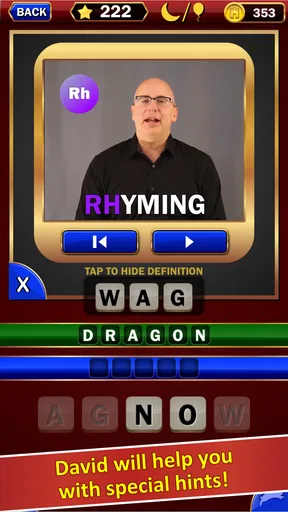
- Helpful hints can prevent players from getting stuck.
- The word-based format supports vocabulary and spelling practice.
- Clean presentation keeps the focus on solving each puzzle.
Cons
- Some puzzles may feel too easy for experienced word-game fans.
- Later levels can rely on obscure or less familiar words.
- Hint systems may be limited unless earned or purchased.
- Repeated puzzle patterns can make extended play feel predictable.
- Ads may interrupt the experience
- depending on the app version.
FAQs for Just 2 Words Plus
What is Just 2 Words Plus and how does the game work?
Just 2 Words Plus is a word puzzle game based on solving clues with two-word answers. Each puzzle gives you a short hint, and you must think of the matching phrase or expression. The Plus version typically offers a larger collection of puzzles and additional content, making it suitable for quick sessions as well as longer word-game play.
Is Just 2 Words Plus suitable for beginners and casual players?
Yes, the game is generally approachable for beginners because its puzzles use a simple two-word format and do not require complicated controls. However, the clues can become progressively more challenging, so players may need a broad vocabulary and good general knowledge. It works well for casual users who enjoy solving a few puzzles at a time without learning complex rules.
Does Just 2 Words Plus require an internet connection?
Many parts of Just 2 Words Plus can usually be played offline after the application and its puzzle content have been installed. An internet connection may still be needed for downloading updates, displaying advertisements, restoring purchases, or accessing optional online features. If offline play is important to you, check the app’s current store description and test the game after disabling your connection.
Are there hints, extra lives, or in-app purchases in Just 2 Words Plus?
The game may include assistance features such as hints, clue reveals, or other tools that help when an answer is difficult. Depending on the version and platform, these resources can be earned through gameplay, obtained by watching advertisements, or offered through in-app purchases. Review the pricing details before downloading, especially if children will be using the app.
Is Just 2 Words Plus free to download, and does it contain advertisements?
Just 2 Words Plus may be available as a free download, but free access can be supported by advertising or limited by optional paid features. Advertisements may appear between puzzles or when you request extra help, while purchases can sometimes remove ads or unlock additional content. Availability, pricing, and advertising policies can vary between Android and iOS.


